

Skip to content
Steam turbine rotor with rows of curved blades inside an open turbine casing

On-site dynamic balancing & reliability engineering

Your machine doesn’t always fail without warning.

Long before a bearing seizes, a fan fails or a gearbox breaks down, machinery starts telling you something isn’t right. Our condition monitoring hears it — and corrects it: on-site single- and two-plane dynamic balancing in the machine’s own bearings, backed by ISO-certified vibration analysis, thermography and oil analysis across the UK and overseas.

  • ISO 18436-2 Category III vibration analyst
  • ISO 18436-7 thermography
  • UK-wide and international site coverage

30+

Years in reliability engineering

86%

Vibration cut on a recent two-plane fan balance, in one shift

6,000+

Assets under routine monitoring

10

Working days report turnaround after a site visit

  • UK & overseas

    Site coverage, travel by arrangement

  • Fully insured

    PL, PI and EL cover — figures on request

  • RAMS every visit

    Issued for review before we attend

  • Independent

    No equipment sales agenda

About the practice

Engineering judgement applied where it matters

Reliability Support Services Ltd is led by our principal reliability engineer and supported by a team of condition-monitoring and rotating-equipment specialists. Whether the scope is a single critical asset or an entire facility, the work is the same: understand how the plant fails, measure what matters, and put a proportionate strategy in place. Engagements range from one-off diagnostic surveys to ongoing reliability programme support.

The value is not in supplying readings. It is in interpreting them — identifying developing trends, separating genuine defects from noise, and giving maintenance teams practical recommendations they can act on. Reporting is written for engineers and managers alike: clear findings, defensible reasoning, and a stated priority for each action.

How we work

Practical Engineering Expertise

Hands-on industry experience across rotating and static plant, applied on site rather than from a template.

Data-Driven Approach

Recommendations grounded in objective measurement, established standards and reliability best practice.

Tailored Solutions

Programmes built around your operational goals, criticality and existing maintenance capability.

Long-Term Reliability Improvement

A focus on eliminating repeat failures and sustaining performance, not on short-term fixes.

Core services

Reliability and maintenance engineering support

Structured engineering services covering failure elimination, maintenance strategy, asset integrity, data analysis, and lifecycle consultancy.

The specialism

The part most consultancies hand to somebody else

Vibration analysis tells you a rotor is out of balance. On-site dynamic balancing puts it right — in the machine's own bearings, in its installed condition, in a single visit. No strip-down, no rotor transport, no workshop slot.

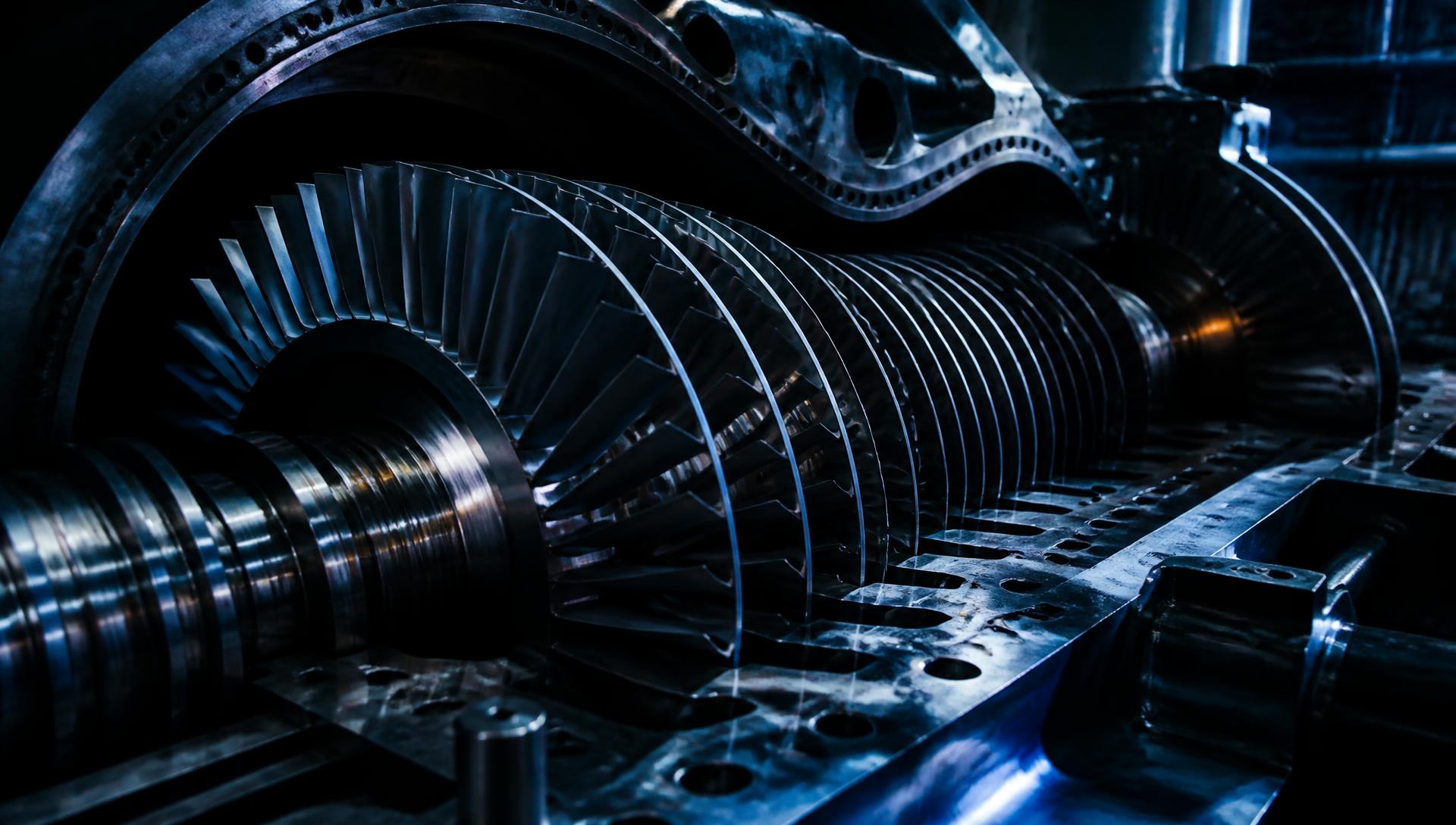
Steam turbine rotor with rows of curved blades inside an open turbine casing
A multi-stage steam turbine rotor. Rotors like this are balanced in their own bearings rather than lifted out to a workshop stand.

Balanced in situ

Single- and two-plane correction using the influence coefficient method with trial weights, in the rotor's own support structure rather than on a workshop stand.

Diagnosed before it is corrected

A dominant 1x component with stable phase points to unbalance. Bolting weights onto a bearing defect, a resonance or a bent shaft wastes a shift and hides the real fault, so we confirm the diagnosis first.

Documented against the standard

Before and after readings in every axis, recorded weight positions, masses and radii, and a residual assessed against the ISO 21940-11 balance quality grade for the machine class.

Rotor sent to a workshop

1–3 weeks

Strip, lift, haul, queue, refit, realign

Balanced in situ

A single shift

In its own bearings, no removal

Indicative for a large process fan; varies with access, lifting requirements and workshop availability.

Worked examples

Findings from recent site work

Anonymised examples of what condition monitoring picks up and what it saves. Client names, sites and identifying details are withheld at their request; the measurements and outcomes are as recorded on the job.

Water & wastewater · on-site balancing

A fan taken from unacceptable to good, in one shift

A large induced draught fan with persistent high vibration and repeat bearing changes. A dominant 1x component with steady phase pointed to unbalance from process build-up rather than a bearing fault, so a two-plane balance was carried out in place — no rotor removal, no workshop slot.

How on-site balancing works

ISO 20816 severity zones, mm/s RMS

Before11.4 mm/szone D
After1.6 mm/szone A

86% reduction — zone D to zone A, corrected in situ.

Food & beverage

Bearing defect found on a cooling-water pump

Situation
Routine vibration route on a duty/standby cooling-water pump set serving a process chiller.
Finding
Overall velocity rose from 2.8 mm/s to 7.1 mm/s over six weeks. Spectral analysis showed a non-synchronous peak at 4.7x running speed with harmonics and sidebands — an outer-race defect on the drive-end bearing.
Outcome
Duty swapped to standby, bearing replaced at a planned outage nine days later. No unplanned stoppage; a full line stop was estimated at around 14 hours.

Manufacturing

Thermography survey of main distribution switchgear

Situation
Annual infrared survey across two MCCs and the main LV distribution board, carried out under normal load.
Finding
Three phase connections running 38–52 °C above reference phase, the worst on an incoming isolator feeding a compressor house.
Outcome
All three joints re-torqued at the next shutdown; retest showed a maximum delta of 4 °C. One connection was judged an imminent failure risk.

In their words

What clients say

Feedback from maintenance and engineering teams. Names and sites are withheld at client request.

The survey picked up an outer race defect on a critical extraction fan six weeks before our next planned shutdown. We changed the bearing on our terms rather than theirs.
Maintenance ManagerFood processing, East of England
Reports are written for engineers. Findings, evidence, and a stated priority — nothing padded. It made the case for a predictive programme far easier to put to the board.
Engineering LeadPharmaceutical manufacturing
On-site balancing of two induced draught fans saved us a strip-down and a week of lost output. Straightforward, competent work.
Reliability EngineerPower generation
The service we receive is of a gold standard. The team goes out of their way to accommodate convenient visits, explain the condition-monitoring background in plain terms, and engage with technicians and operators at every site. That willingness to pass on knowledge is over and above what we expect and is invaluable in developing our people.
Operations ManagerEnergy distribution, UK

Sectors

Industries we support

Experience across regulated, continuous-process and heavy rotating plant environments.

  • Manufacturing
  • Automotive
  • Aerospace
  • Energy & Utilities
  • Power Generation
  • Oil & Gas
  • Food & Beverage
  • Pharmaceutical
  • Chemical Processing
  • Water & Wastewater
  • Marine & Offshore
  • Facilities Management

Condition monitoring

Diagnostic services delivered on site

The three diagnostic techniques we use to find what is wrong, carried out on site with calibrated equipment and reported against recognised standards. Where the root cause is unbalance, we can correct it in the same visit for an agreed extra cost.

Close-up of gas turbine compressor blades inside a power plant casing

Vibration Analysis

Monitoring of electric motors, pumps, fans, compressors, gearboxes and turbines to detect bearing defects, misalignment, looseness, unbalance and resonance before they become failures.

Vibration Analysis in detail

Infrared Thermography

Non-invasive thermal imaging of switchgear, MCCs, transformers, mechanical equipment and building envelopes, detecting overheating components while equipment stays operational.

Infrared Thermography in detail

Oil Analysis

Laboratory-backed lubricant testing that reveals wear, contamination and degradation early, covering routine condition monitoring, wear debris, hydraulic and transformer oils.

Oil Analysis in detail
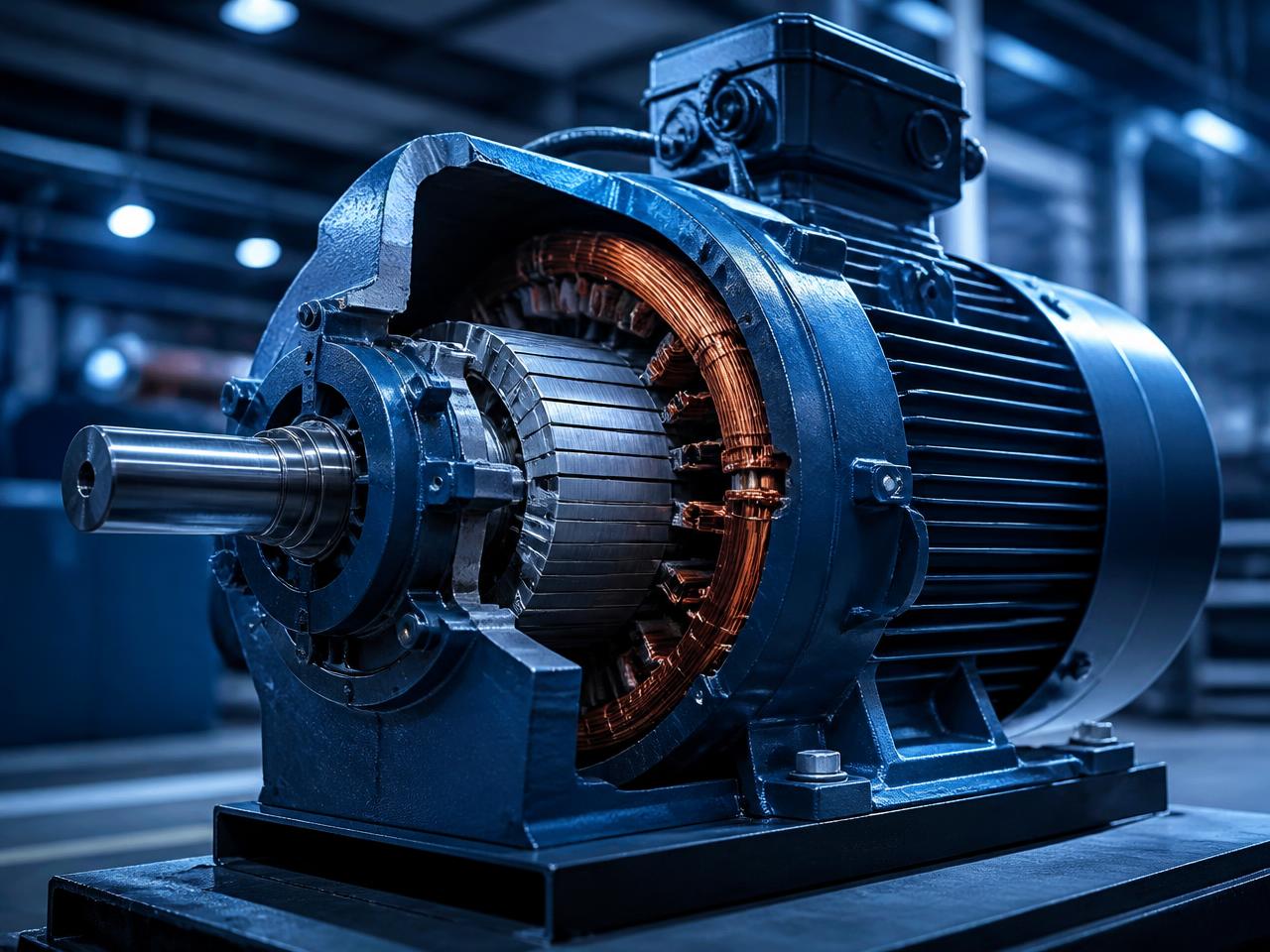
Large industrial electric motor with partially exposed rotor and stator windings

Rotating equipment: from diagnosis to correction

Vibration analysis identifies the defect; on-site dynamic balancing corrects it. Motors, fans, pumps and turbines are assessed in their installed condition, and single- or two-plane balancing is carried out in situ — avoiding removal, reducing vibration levels, protecting bearings, and cutting parasitic energy losses.

Discuss a survey

Scope and standards

Equipment covered and how it is assessed

Measurements are evaluated against published standards and machine history, so findings are defensible rather than opinion.

Plant covered

  • Electric motors
  • Centrifugal pumps
  • Fans and blowers
  • Screw and reciprocating compressors
  • Gearboxes
  • Steam and gas turbines
  • Switchgear and MCCs
  • Transformers
  • Conveyors and drives
  • Hydraulic systems

Standards worked to

  • ISO 10816 / ISO 20816 — vibration severity evaluation
  • ISO 13373 — condition monitoring of machines, vibration
  • ISO 21940-11 — rotor balancing: tolerances for rotors in a rigid state (supersedes ISO 1940-1)
  • ISO 14224 — reliability and maintenance data collection
  • ISO 18436 — personnel certification requirements

The deliverable

What a report actually looks like

Every survey ends in a written report. This is the structure and format ours take, with representative figures rather than a specific client's — so you know exactly what lands in your inbox before you commission anything.

Condition monitoring survey — severity summary

Representative example
Report ref.
RSS-0000-00
Site
[Client site, withheld]
Survey date
14/05/2026
Assets surveyed
24
Analyst
ISO 18436-2 Cat III
AssetFindingOverallZoneActionBy
Extract fan 01, drive endOuter race bearing defect7.1 mm/sCPlan replacementWithin 6 weeks
Cooling pump 03Rotor unbalance, 1x dominant5.4 mm/sBBalance on siteNext window
Compressor 02, motor NDEEarly looseness indication3.2 mm/sAMonitorNext route
Gearbox 04, inputNo significant defect1.8 mm/sANo actionNext route

Layout of page 1. Spectra, time waveforms and thermal images follow for every flagged asset. Figures shown are representative, not a specific client's survey.

Every report contains

  • A one-page severity summary — every asset, ranked, on a single sheet
  • Spectra and time waveform plots for each flagged machine
  • Named fault mode with the evidence supporting it
  • ISO 20816 zone against each reading, not a subjective view
  • A prioritised action list with a timescale per asset
  • A stated retest interval so the next visit is already scoped

Issued within ten working days of the visit. Anything judged an imminent failure risk is raised verbally before we leave site.

How it works

What an engagement looks like

A straightforward sequence, whether the scope is a single problem machine or a site-wide monitoring programme.

  1. 01

    Initial discussion

    A short call to understand the plant, the problem, the criticality of the asset and what a good outcome looks like. No charge, no obligation.

  2. 02

    Site survey and data capture

    Attendance on site with calibrated instrumentation. Measurements are taken with equipment running in normal operating condition wherever possible.

  3. 03

    Analysis and reporting

    Data is analysed against recognised standards and machine history. You receive a written report with findings, supporting plots and a severity ranking.

  4. 04

    Recommendations and follow-up

    Prioritised actions with a stated retest interval, plus support in interpreting results and planning corrective work at the next available window.

Reliability engineers assessing rotating machinery on an industrial site

Illustrative image. Work is led by our principal reliability engineer and the team of condition-monitoring specialists.

The team behind the work

A team of experienced reliability specialists

Our Principal Reliability Engineer

Supported by a team of condition-monitoring and rotating-equipment specialists

  • ISO 18436-2 Category III vibration analyst
  • ISO 18436-7 Category II thermographer
  • MLA I Machine Lubricant Analyst
  • 30+ years in reliability engineering
Most failures announce themselves long before they happen. Our job is to listen at the right time, with the right instruments, and explain plainly what the data means.

Our team brings together specialists in condition monitoring and rotating equipment, supporting manufacturing, power generation, utilities and process operations with expertise developed across complex industrial assets.

Our principal engineer personally attends or oversees the diagnostic and balancing work, so the engineer interpreting your data is the one who took it. We work as an extension of plant and maintenance teams, combining disciplined measurement with experienced engineering judgement.

Our advice is independent, free from an equipment sales agenda, and focused on clear findings and proportionate actions that engineers can defend to their own management.

Typical projects

  • Condition monitoring routes on continuous-process manufacturing sites
  • Root cause investigations into repeat rotating-plant failures
  • Predictive maintenance programmes built from scratch
  • Criticality analysis and maintenance strategy reviews

Approvals and site access

Working on your site

Information for SHEQ and procurement teams reviewing site access. Insurance and policy documents are available on request, and RAMS are supplied before every visit as standard.

Insurance

Public liability
£10,000,000
Any one occurrence
Professional indemnity
£5,000,000
Any one claim
Employers' liability
£10,000,000
Statutory minimum exceeded

How we work on site

  • RAMS before every visit

    A task-specific risk assessment and method statement is issued for review ahead of attendance, not produced at the gate.

  • Permits and induction

    We work to your permit-to-work system and complete site induction before any work begins. Confined space, hot work and electrical permits accommodated.

  • Calibrated instrumentation

    All data collection and thermal imaging equipment is calibrated annually to a traceable standard. Certificates accompany the report or are supplied on request.

  • Safety passports

    CCNSG Safety Passport and ECITB-recognised training held. DBS checks and site-specific clearances arranged where a client requires them.

Where we travel

Routine surveys across the UK are normally scheduled within one to two weeks, with short-notice attendance for deteriorating machines. We work internationally too — see below.

  • East of England

    Home region — usually next-day

  • East & West Midlands

    Routinely covered

  • London & the South East

    Routinely covered

  • South West

    Routinely covered

  • North West & Yorkshire

    Routinely covered

  • North East & Scotland

    Planned visits, overnight

  • Wales

    Planned visits

  • Northern Ireland & offshore

    By arrangement

Beyond the UK

We travel internationally and are glad to. Europe, and further afield for planned programmes, shutdowns and commissioning support. Where a site has no local capability, mobilising an engineer with the instrumentation is often quicker and cheaper than sourcing one locally.

Tell us where the plant is and we will tell you what is practical.

  • Planned shutdown, outage and turnaround support
  • Commissioning and acceptance testing on new plant
  • Balancing and diagnostic visits where no local capability exists
  • Training and handover for in-house condition monitoring teams

Need insurance documents, policies or a supplier questionnaire completed? Download our capability statement or email admin@reliabilitysupportservices.com.

Commercial arrangements

Ways of working together

Work is scoped before it is priced. Every engagement begins with a short call to establish the asset list, the problem, and the level of support required.

Diagnostic survey

A single visit to investigate a specific problem asset or a defined group of machines, with a full written report and recommendations.

Typically a single day on site

Priced per visit, quoted after a short scoping call.

Routine monitoring route

Scheduled monthly or quarterly visits covering an agreed asset list, with trending between visits and severity-based escalation.

Monthly or quarterly, from around 20 assets

Priced per route, based on asset count and visit frequency.

On-site dynamic balancing

One-off or repeat balancing visits for fans, motors, pumps and turbines, carried out in situ with no rotor removal.

Most single-rotor jobs are one shift

Priced per machine and visit, quoted after a short scoping call.

Reliability programme support

Retained engineering input: criticality analysis, maintenance strategy, RCFA facilitation and KPI development alongside your team.

Day rate or a fixed monthly allocation

Agreed as a day rate or fixed monthly allocation.

Questions

Frequently asked

Where do you travel to?

Anywhere in the UK — mainland England, Scotland and Wales, plus Northern Ireland and offshore locations. We also work internationally: Europe regularly, and further afield for planned programmes, shutdowns and commissioning. If the plant is outside the UK, ask — the answer is usually yes.

What is the typical lead time for a survey?

Routine surveys are usually scheduled within one to two weeks. Where a machine is deteriorating or a shutdown decision depends on the result, attendance can normally be arranged at short notice.

Can I book a one-off survey, or do I need an ongoing contract?

Both are available. Many clients start with a single diagnostic visit on a problem asset, then move to a scheduled route once the value is clear. There is no minimum commitment.

What access do you need on site?

Safe access to the machine while it is running in a representative operating condition, a site induction, and any permits your safety system requires. Motor and drive nameplate data and recent maintenance history are helpful but not essential.

How quickly do I get the report?

Written reports are issued within ten working days of the visit as standard. Any finding judged to be an imminent failure risk is raised verbally before leaving site.

How are findings prioritised?

Each asset is assessed against the relevant ISO severity bands and its criticality to your process, then given a clear action and timescale — monitor, plan, or act now. Recommendations are proportionate to the risk, not blanket replacement.

Contact

Request a quote

Looking for engineering consultancy or condition monitoring support? Get in touch to discuss your operational challenges and receive a free, no-obligation quote.

Start with whichever of these sounds like your situation, or go straight to the form.

Got a spectrum, a thermal image or a nameplate photograph? Send this form first, then email the files to engineering@reliabilitysupportservices.com quoting your company name — we will match them up.

Fields marked * are required. Your details are used only to answer this enquiry.

Prefer not to use the form? Email us instead or call +44 7903 528358.

Need something to circulate internally? .

Direct contact

Telephone
+44 7903 528358
Email
engineering@reliabilitysupportservices.com
Goes straight to the engineering team. Billing and administration addresses are in the footer.
Address
Chatteris, Cambridgeshire
PE16 6GX
Company information

Company Reg No. 17250894

VAT No. GB 523256117

Currently accepting new site work across the UK and overseas. Enquiries are answered directly by our engineering team. Site work is undertaken across the UK and internationally.

CallEmail